How to Prepare a Room for Plastering in Pontypridd
Getting ready for a plasterer in Pontypridd? Our guide covers every prep step, from clearing the room to priming walls, so the job goes smoothly from day one.
How to prepare a room for plastering in Pontypridd
A little preparation before a plasterer arrives makes a real difference. It protects your belongings, helps the job run smoothly and helps the plaster bond properly. David Cleeves Plastering offers skimming, dry lining, rendering and repairs in Pontypridd. This is a general guide for homeowners, and your own plasterer's instructions come first.
Clear the room
Move out as much furniture as you can. Plastering creates fine dust that settles everywhere, and wet plaster can splash further than you expect. For anything too heavy to move, push it to the centre of the room and cover it. Take down curtains, poles, pictures and anything fixed to the walls that comes off easily.
Protect the floor and the rest of the house
Lay dust sheets or thick polythene across the whole floor, not just the middle, and tape the edges. Hang a sheet over doorways that lead to the rest of the house, because plaster dust travels. Tape around switches and sockets, and cover any fitted wardrobes or shelving you cannot move.
Electrics and plumbing come first
Plastering goes on late in most renovation sequences. Any cable chasing, pipework or boarding should be finished before plastering day, because you do not want to cut into a fresh wall. If you need to move light fittings or sockets, ask a qualified electrician to isolate and move them first. Do not take apart anything electrical you are not confident about.
Look at the walls and ceiling
- Loose or hollow plaster. Press and tap. A hollow sound or movement means plaster has lost its bond and usually needs to come off before new work goes on.
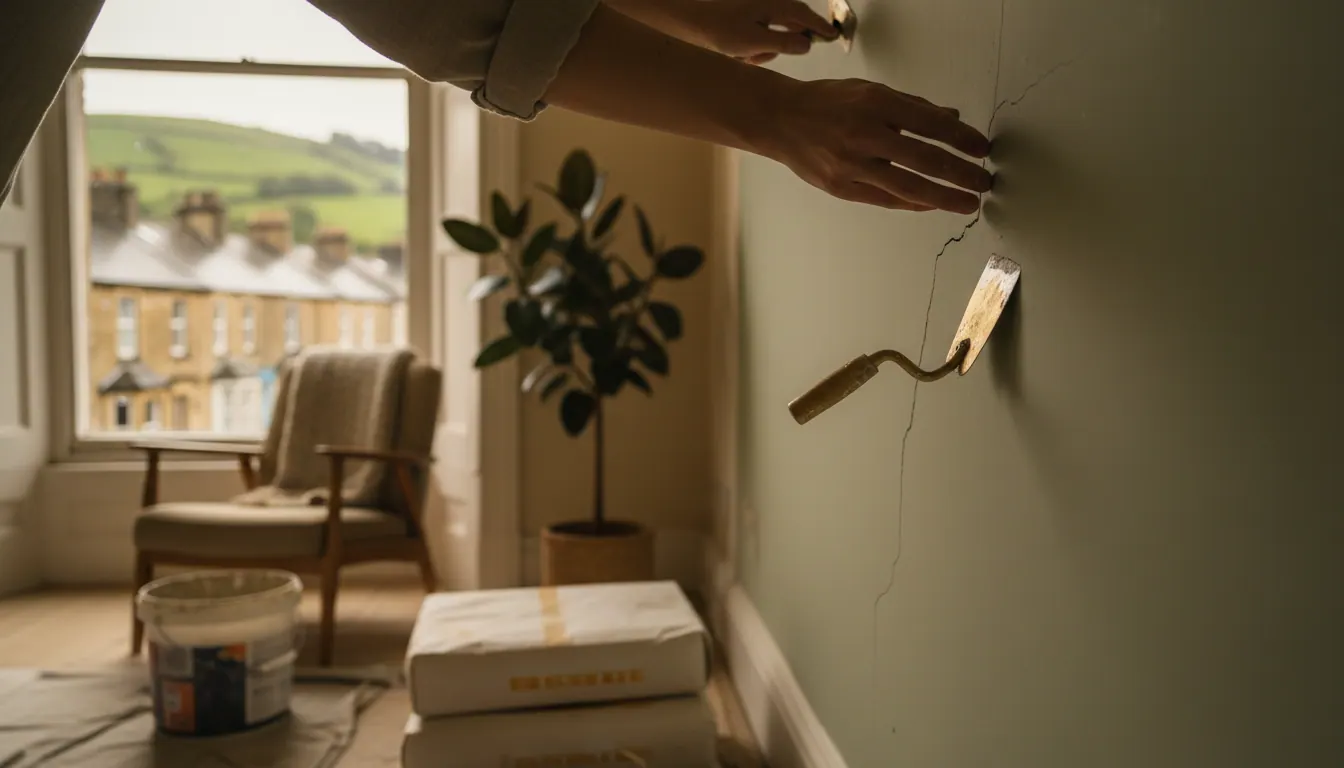
- Cracks. Hairline cracks are common. Cracks that are widening, run diagonally from the corners of windows or doors, or come with signs of damp should be assessed by a suitable professional before anyone plasters over them.
- Damp. Dark patches, tide marks or crumbling plaster mean the source of moisture should be found and dealt with first. Plastering over active damp does not fix it.
See our guide on cracks in plaster walls.
Old wallpaper and the surface
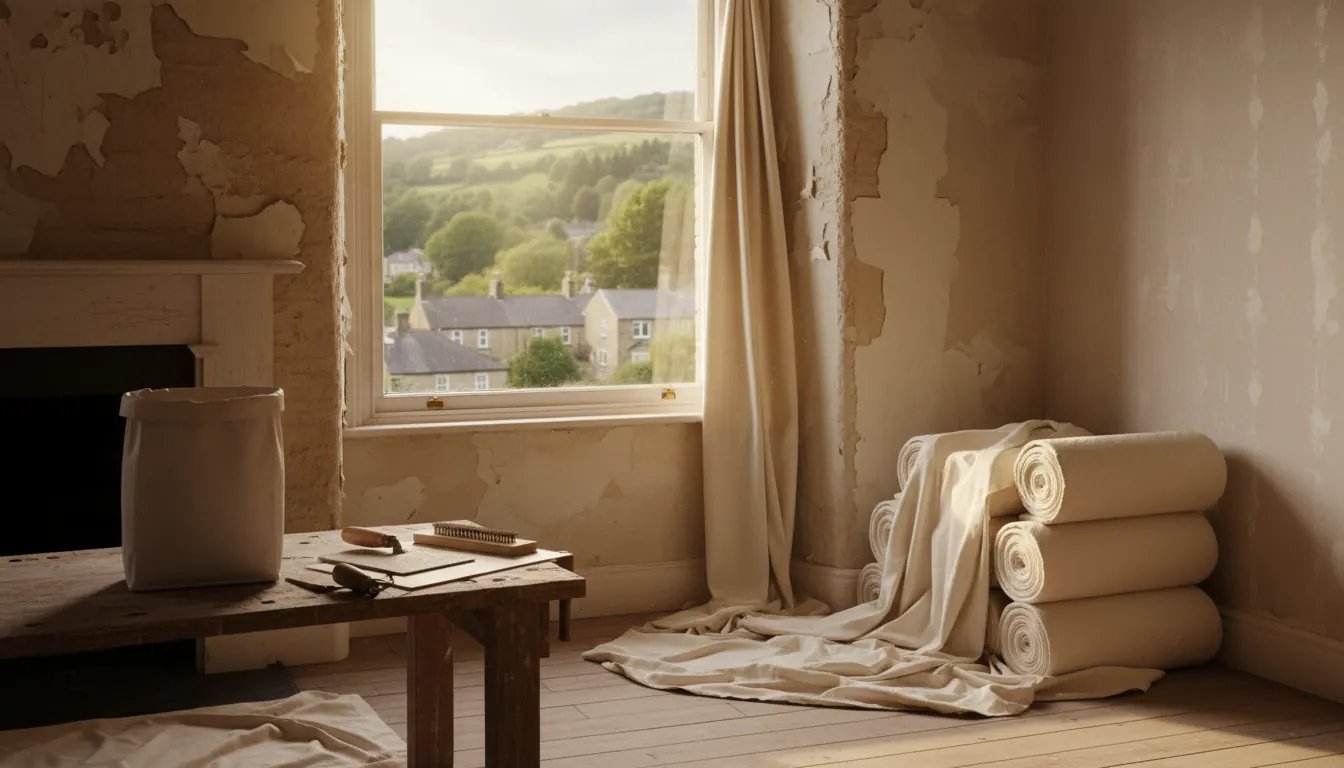
Wallpaper should come off completely before plastering, because plaster over paper tends to peel as the paper lifts. Brush off dust and loose debris. Whether the surface needs sealing or a bonding coat depends on what it is, such as bare brick, board or old painted plaster, so ask your plasterer what is needed rather than guessing.
Ceilings and old Artex
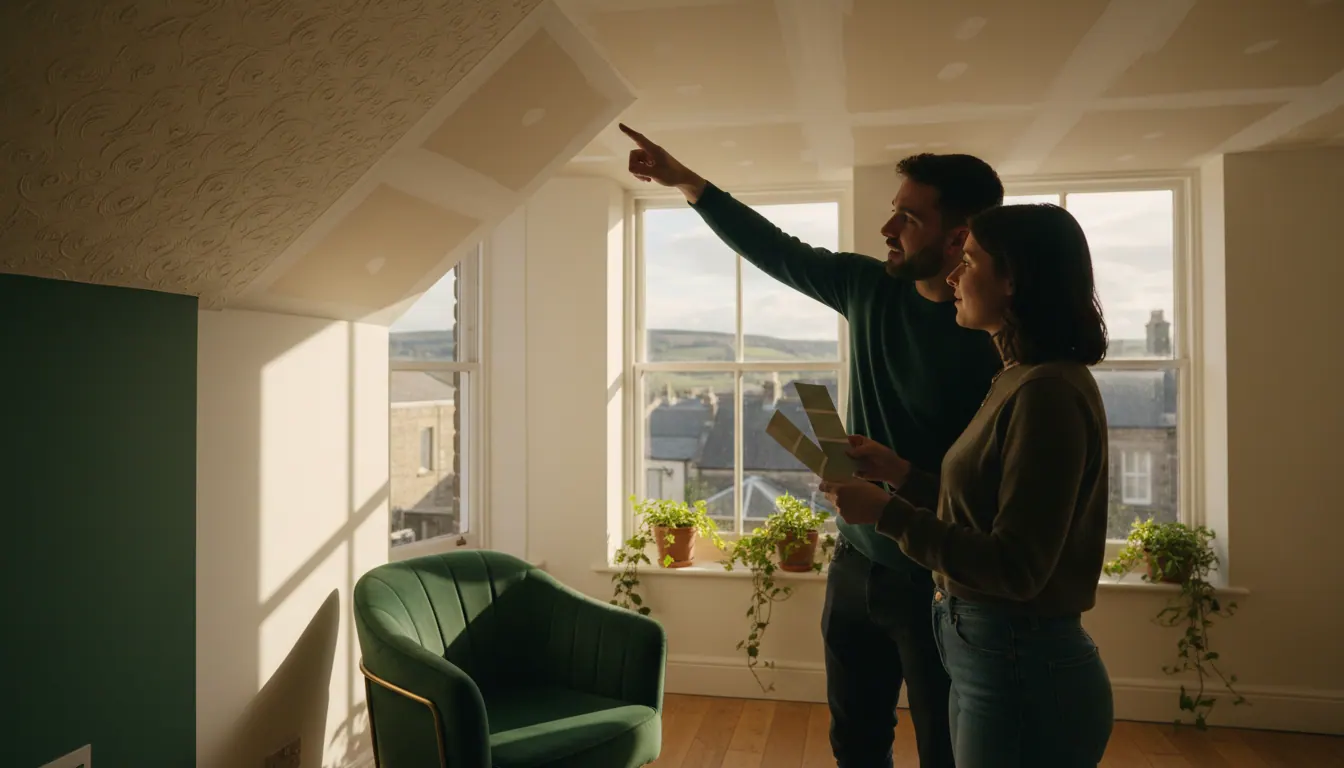
If your ceiling has an old textured coating such as Artex, be aware that some older textured coatings can contain asbestos. Do not sand, scrape or disturb them. Get advice from a licensed professional before any work starts. David Cleeves Plastering does not offer asbestos testing or removal. See our guide on covering Artex ceilings.
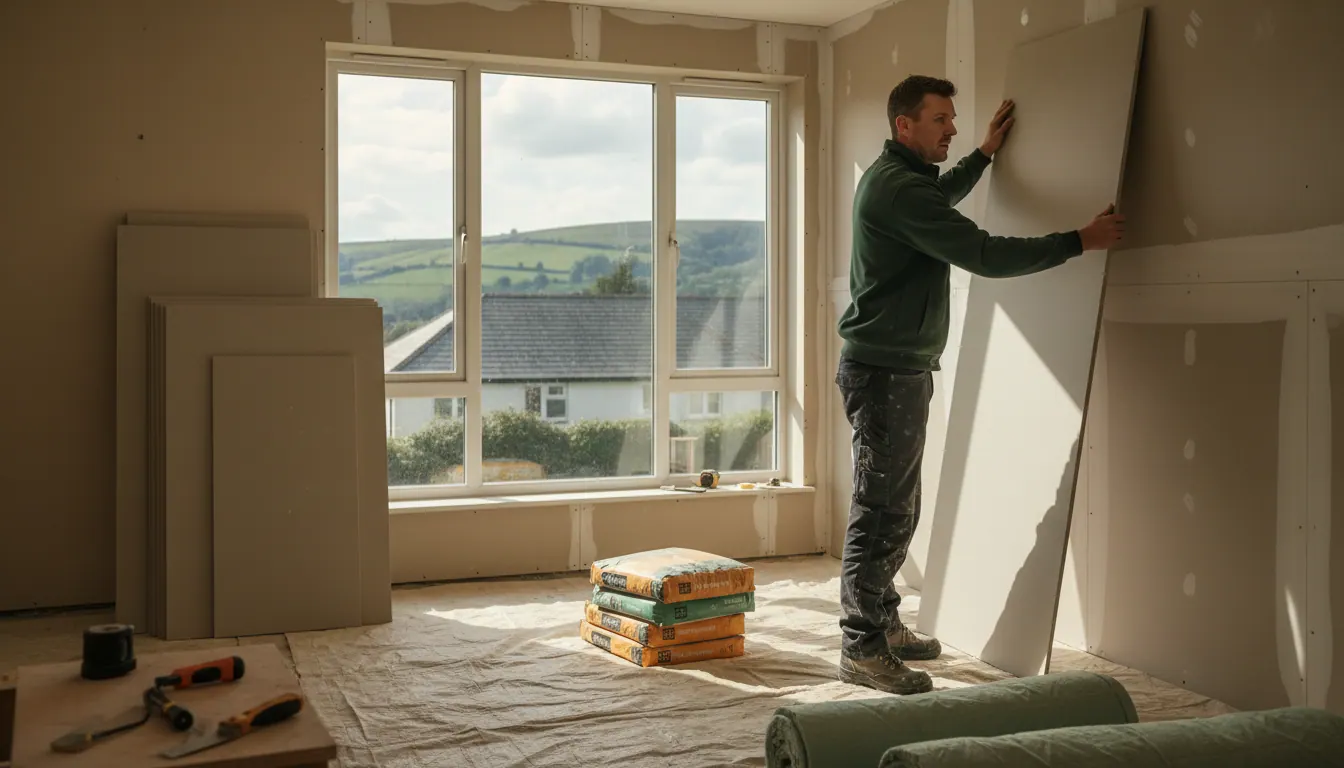
Dry lining first, where needed
If a room is being dry lined, the plasterboard is fixed and the joints taped before the surface is skimmed, so that work comes first. See dry lining.
What customers notice
Customers on Google mention minimal mess, tidiness and punctuality. One wrote that David also checked in several times after the job to see whether the plaster had dried well and the paint sealed in.
Also checked in with us several times after completion to check the plaster had dried well and the paint sealed in well.
Shan Kenchington, Google review
After plastering: drying and decorating
New plaster needs to dry fully before decorating, and how long that takes depends on the thickness, ventilation and time of year. Follow your plasterer's advice rather than rushing. A first coat of thinned emulsion, often called a mist coat, is commonly used to seal new plaster before the top coats. Avoid forcing it dry with a heater, because rapid drying can cause cracking.
Frequently asked questions
How do I prepare a wall for skimming? Clear the room, strip any wallpaper, brush off dust, and sort out any damp or active cracks first. Ask your plasterer what the surface itself needs.
Can I paint new plaster after a couple of days? Usually not. It should look uniformly pale with no dark or damp patches, and your plasterer will advise on timing.
Does a room need to be dry lined first? Only if the walls need boarding. Your plasterer can advise.
How do I get a quote? Call 07887 778383 or use the contact form with photos of the room.
Getting a room ready in Pontypridd?
Call 07887 778383 or use the contact form with photos and a few details, and David will get back to you.
“Excellent customer service from Dave Turned up to give us a quote in a few days which was very good and we had the work booked in soon after. How refreshing to have someone who turns up when they say they are going .Worked so hard in very difficult hot weather conditions and the end result we are d…”